


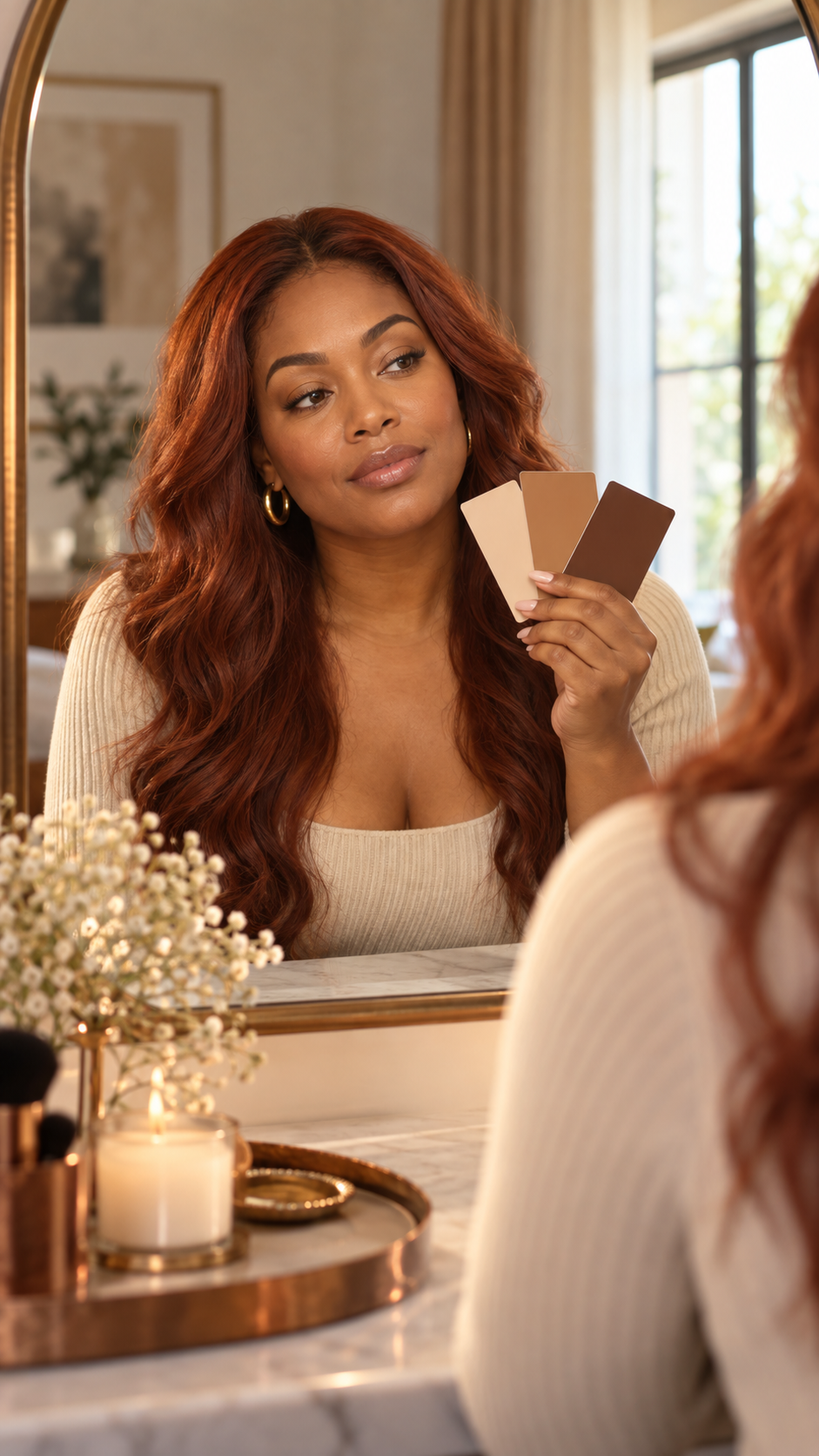
A major hair-color change can make familiar eyebrows look different, even when the brows themselves have not changed. Dark brows may feel more pronounced beside lighter hair. Warm hair can make an ashy brow appear cooler, while silver or cool-toned hair may alter how a warm brown reads.
That does not mean your eyebrows must be recolored to match your hair exactly. A better goal is visual balance: a brow color and finish that work with your overall coloring while preserving enough contrast to frame the eyes.
Start with the new color family
First, describe the direction of your new hair color in broad terms. Is it warmer, cooler, lighter, deeper, or more neutral than before? This is more useful than relying on a fashionable shade name that different people may interpret differently.
Look at the hair in indirect daylight, especially if it was recently colored. Strong bathroom bulbs and phone filters can exaggerate warmth, flatten cool tones, or change perceived depth. The purpose is not to perform professional color analysis; it is to observe the color you actually see.
Keep your natural brow depth in the conversation
Next, notice how light or dark your natural eyebrow hairs are. Brow depth helps create definition around the eyes, so making brows identical to very light hair is not automatically the most balanced choice. Likewise, dramatically deepening naturally pale brows can create more contrast than you intended.
Ask yourself whether you want the brows to remain noticeable, become softer, or make a stronger statement. These are preference questions, not fixed rules.
Suggested video placement: Embed the YouTube Short here, after the reader has considered hair color and natural brow depth.
Decide how much contrast you like
Contrast is the visible difference between your hair and eyebrows. Some people prefer a soft, low-contrast look. Others like brows that are clearly deeper because they frame the face and eyes.
Look at your full face rather than examining one eyebrow at close range. Then compare the result in more than one ordinary setting: window light and the lighting where you spend most of your day. A balanced result should reflect your taste, not a demand that two types of hair look identical.
Preview before choosing a service
Temporary brow makeup can help you explore a lighter, deeper, warmer, cooler, or more neutral direction before making a brow-color decision. Use a cosmetic specifically intended for the eye area, follow its directions, and keep applicators clean.
Apply only enough to visualize the color direction. Photograph the preview in natural light and remove it according to the product’s instructions. If an eye-area cosmetic causes irritation, the FDA advises stopping its use immediately and seeing a doctor if irritation persists.
Prepare for the consultation
Bring a daylight photo of your current hair and brows plus one reference image that shows the level of contrast you prefer. Explain what you like about the reference instead of asking for an exact copy.
Useful questions include:
- Does this proposed brow color lean warmer, cooler, or neutral?
- How does its depth compare with my natural brow hairs?
- Is the service intended to color the brow hairs, the skin, or both?
- What exact product will be used, and is it intended for eyebrows and the eye area?
- What aftercare applies to this service?
The FDA advises consumers to use cosmetics near the eyes only when intended for that purpose. Ordinary scalp hair dye is not a substitute for a brow product or professional brow-color service. FDA hair-dye guidance states that eyebrow and eyelash dyeing are not permitted uses of coal-tar hair dyes.
The balanced takeaway
After changing your hair color, reassess your brows in three steps: identify the new color family, notice your natural brow depth, and choose the amount of contrast you prefer. Preview the direction with temporary eye-area makeup, then discuss the desired finish and exact product before any service.
Your hair and brows can coordinate without becoming the same shade. Balance is personal; an exact match is not required.
Authoritative sources
Educational disclaimer
This article provides general educational information only. It does not provide medical advice, guarantee a cosmetic result, or replace the directions for a specific product, qualified professional, or healthcare provider.